Pleasanton, Calif.-based Construction Testing Services has validated Fortera ReAct binder performance across all six ASTM C1157, Standard Performance Specification for Hydraulic Cement categories: general use, high early strength, moderate or high sulfate resistance, and moderate or low heat of hydration – a profile typically requiring four separate formulations. As a performance-based standard, C1157 evaluates cement on measurable outcomes – compressive strength, air content, set time, fineness, density and mortar expansion – rather than chemical composition.
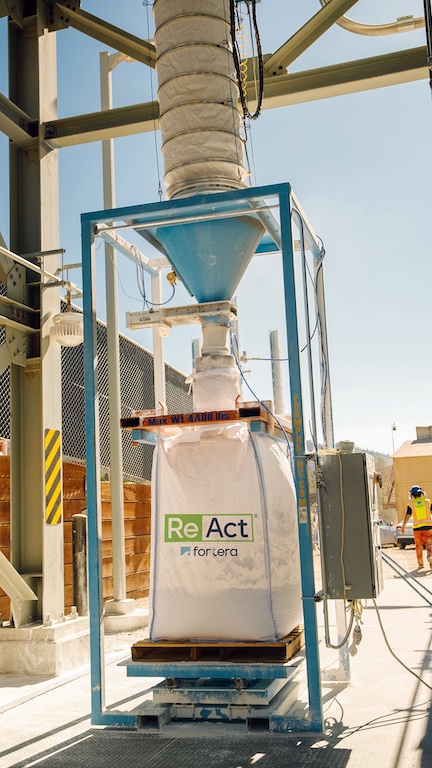
ReAct versatility equates to simplified procurement and streamlined mix design, affording contractors a single cementitious material option across a project’s concrete schedule. The material’s performance advantages, including two-day versus 28-day design strength development, stem from a unique calcium carbonate structure formed by mineralizing industrial carbon dioxide (CO₂).
Fortera’s ReCarb technology integrates with existing cement plant infrastructure to transform CO2 emissions into finished primary or supplementary binder. The energy-efficient ReCarb process operates at lower kiln temperatures than traditional cement clinker, enabling producers to lower emissions associated with their output by up to 70%. ReAct can be used as a standalone binder or blended with portland cement and supplementary cementitious materials to optimize set time, workability, and strength development.
“For years, lower-carbon options have been seen as a compromise on either performance or cost. ReAct shows that contractors do not have to choose,” said Fortera Vice President of Products Craig Hargis. “It meets the strength and durability requirements they expect, avoids a green premium, and fits into the specifications and infrastructure already in use.”