The American Cement Association confirmed producer member adherence to Roadmap to Carbon Neutrality goals in an early-December industry and media briefing, stressing U.S. cement companies’ two leading trajectories: upward carbon dioxide (CO2) or CO2 equivalent (CO2e) emissions avoidance and downward carbon intensity per metric ton of material shipped. ACA President and CEO Mike Ireland opened the briefing, themed “Construction Materials Carbon Progress” and staged at the National Press Club in Washington, D.C., with a review of member company deliverables at the Roadmap’s fourth anniversary:
• U.S. cement producers have avoided 13.3 million metric tons of CO2 or CO2e emissions since 2021, a tally reflecting marked increases in blended cement offerings and shipments.
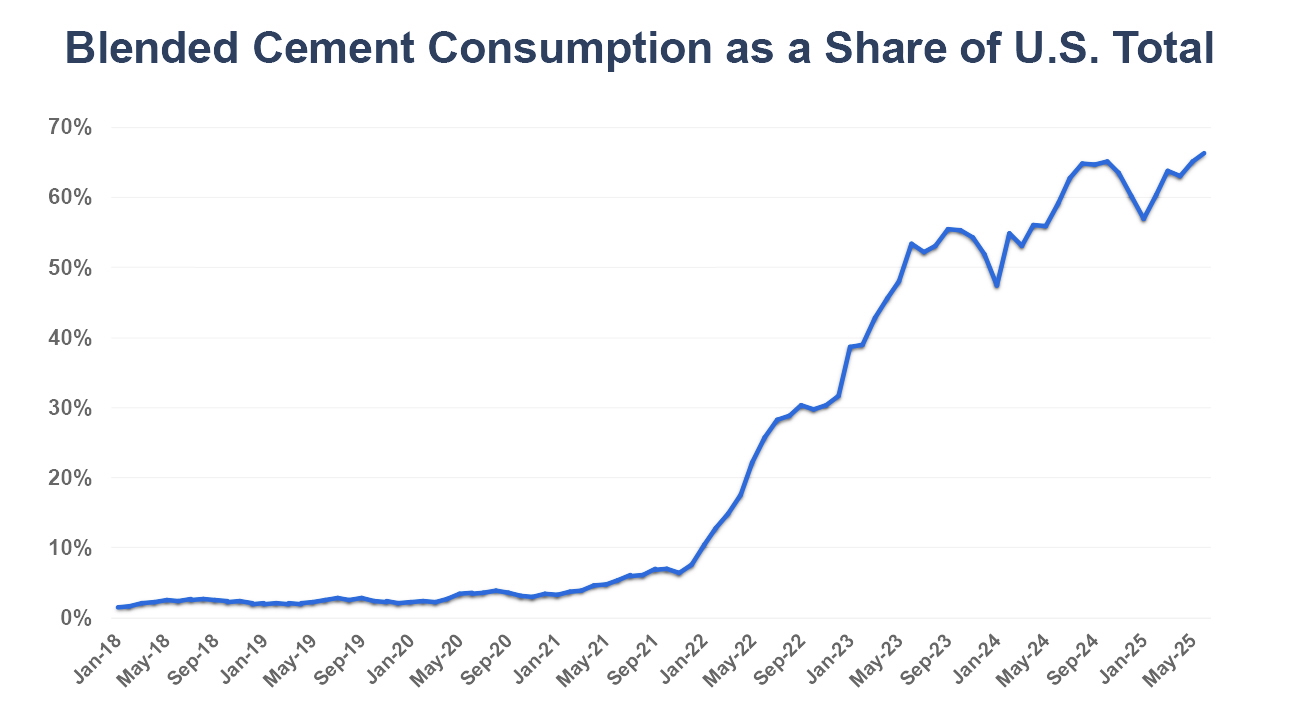
• Consumption of blended cement as a share of the principal U.S. concrete binder has climbed from less than 5% before 2021 to 65% by mid-2025. Blended cement combines traditional ground cement clinker with finely graded limestone at typical levels of 5% to 10% by weight.
• Blended cement uptake among concrete producers and their customers in public and private construction markets segments has the U.S. cement industry more than halfway to lowering the clinker-to-cement ratio from the 2019 base year level of 0.91 to 0.864 in 2024, toward 0.853 in 2030.
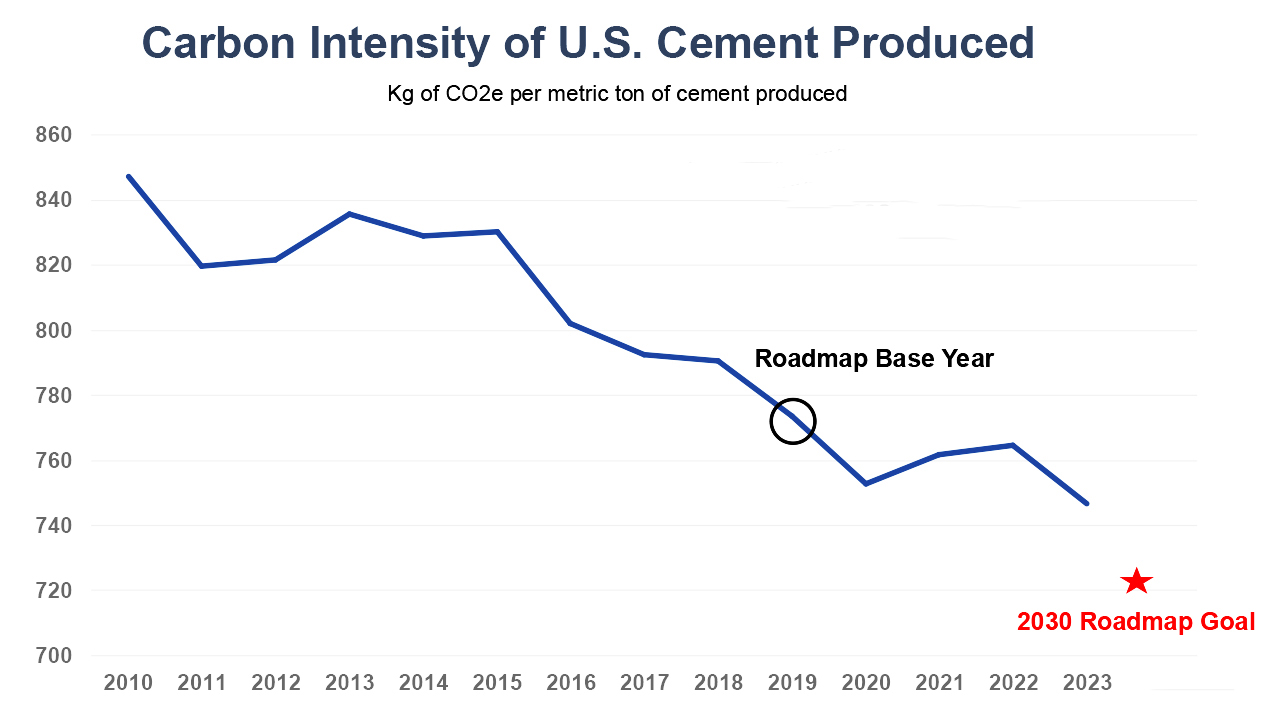
• The industry is more than halfway to a 2030 target for carbon intensity per metric ton of cement (kilograms of carbon dioxide emissions equivalent or kgCO2e). Cement companies are on track to lower intensity from a 2019 base year level of 774 kgCO2e to 723 kgCO2e by 2030.
• In four of six categories of kiln power sources, cement companies are trending less than 5 points from 2030 targets in their mix of coal, natural gas, petroleum coke, alternative fuels, waste solvents and biofuels. Most notably, companies have lowered coal from 41% of the 2019 fuel mix to 29.9% in 2024, toward a 2030 target of 28.2%.
Addressing Roadmap calls to action downstream of their plants, Ireland noted, cement companies are working with customers to lower the carbon intensity of concrete from a 2019 baseline of 230 kgCO2 per cubic yard toward a 2030 goal of 164 kgCO2 per cubic yard. Underpinning lower carbon concrete targets are the members of three supplementary cementitious materials (SCM) organizations that joined ACA for “Carbon Progress” presentations: American Coal Ash Association, Natural Pozzolan Association and Slag Cement Association. Combined 2024 shipments of fly ash, natural or activated pozzolans and slag cement to North American concrete producers eclipsed 20 million tons – edging the industry to the 164 kgCO2 per cubic yard of concrete watermark.
Joining ACA at Carbon Progress were representatives of six peer organizations serving supplementary cementitious material, concrete and steel producers. With an eye to spotlighting the significant carbon management undertakings among cement, concrete and steel producers—three of the top construction supply chain parties—the briefing was hosted by Semco Publishing’s Concrete Products and Cement Optimized brands, along with California-based Climate Earth, a leading developer of construction materials sustainability software and forerunner in expedited cement, aggregate and concrete environmental product declaration delivery.